The best educational flash cards match a learner’s age and skill goal, from letter sounds and sight words to number practice and bilingual vocabulary. These picks include hands-on cards, interactive readers, and game-based activities, so consider whether you want independent practice, guided learning, or a mix.
Quick Top Products
Educational Insights Hot Dots Phonics Fun
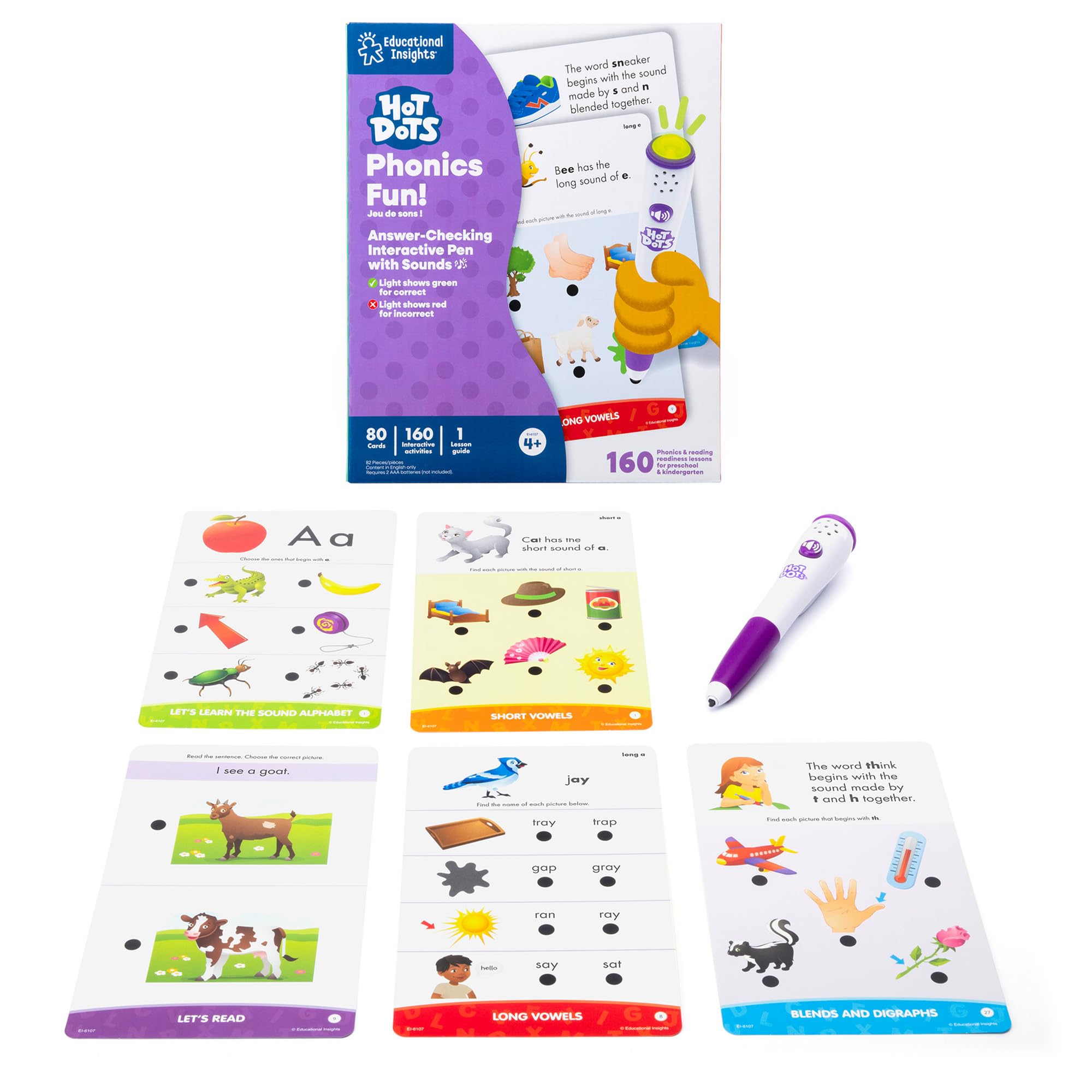
- Includes 80 double-sided cards for 160 activities.
- Practices letter sounds, vowels, blends, digraphs, and sight words.
- The pen lights up to show correct and incorrect answers, and its sounds can be muted.
Best For: Preschool and kindergarten learners ready to practice letter sounds, blends, and sight words independently.

hand2mind Alphabet Picture Mnemonic Cards
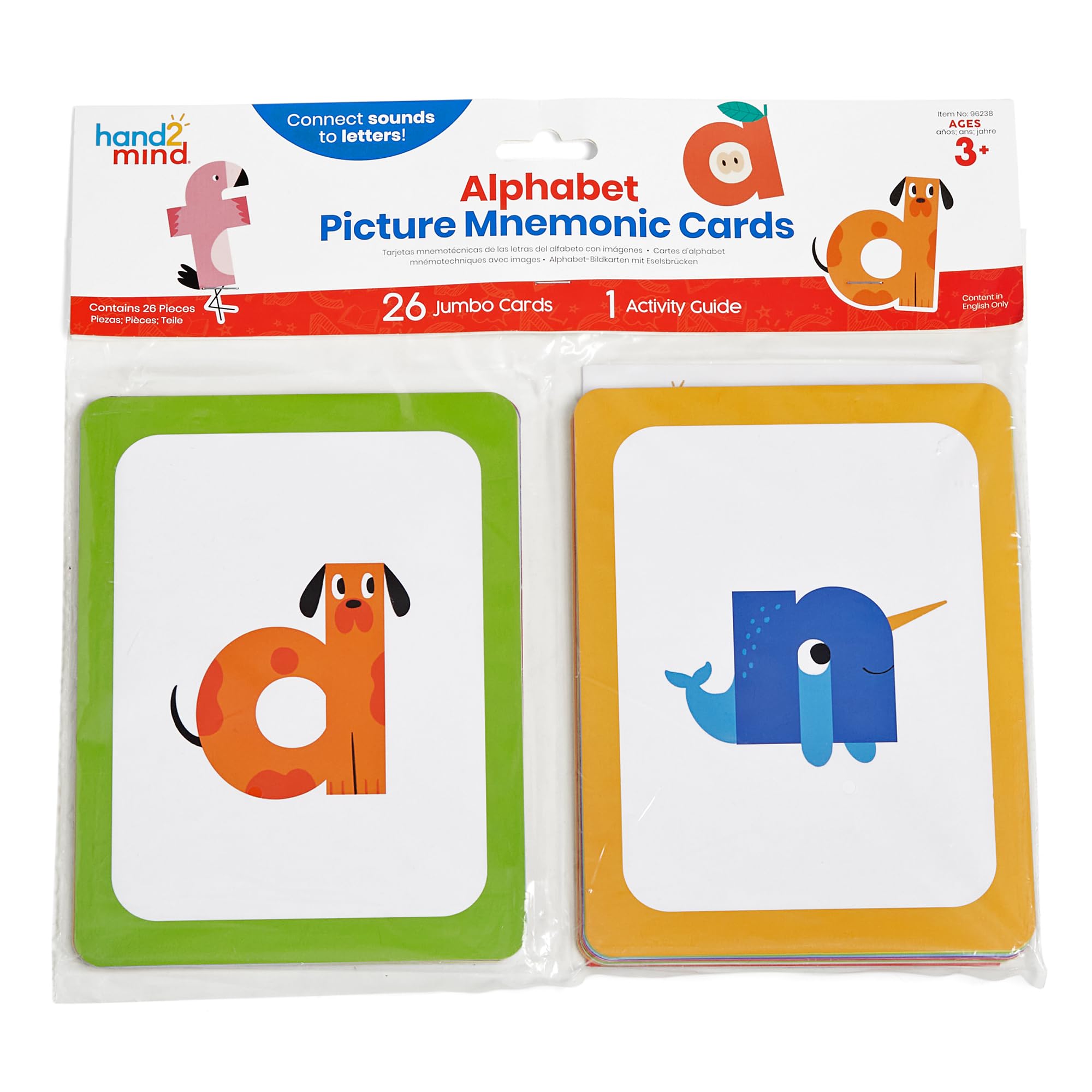
- Includes 26 double-sided cards and an activity guide.
- Picture cues link lowercase letter shapes to familiar images and sounds.
- Jumbo 6 x 8 inch cards are designed for classroom visibility.
Best For: Young learners practicing letter recognition and sounds at home or in a classroom center.
Mr. Pen Alphabet Flash Cards
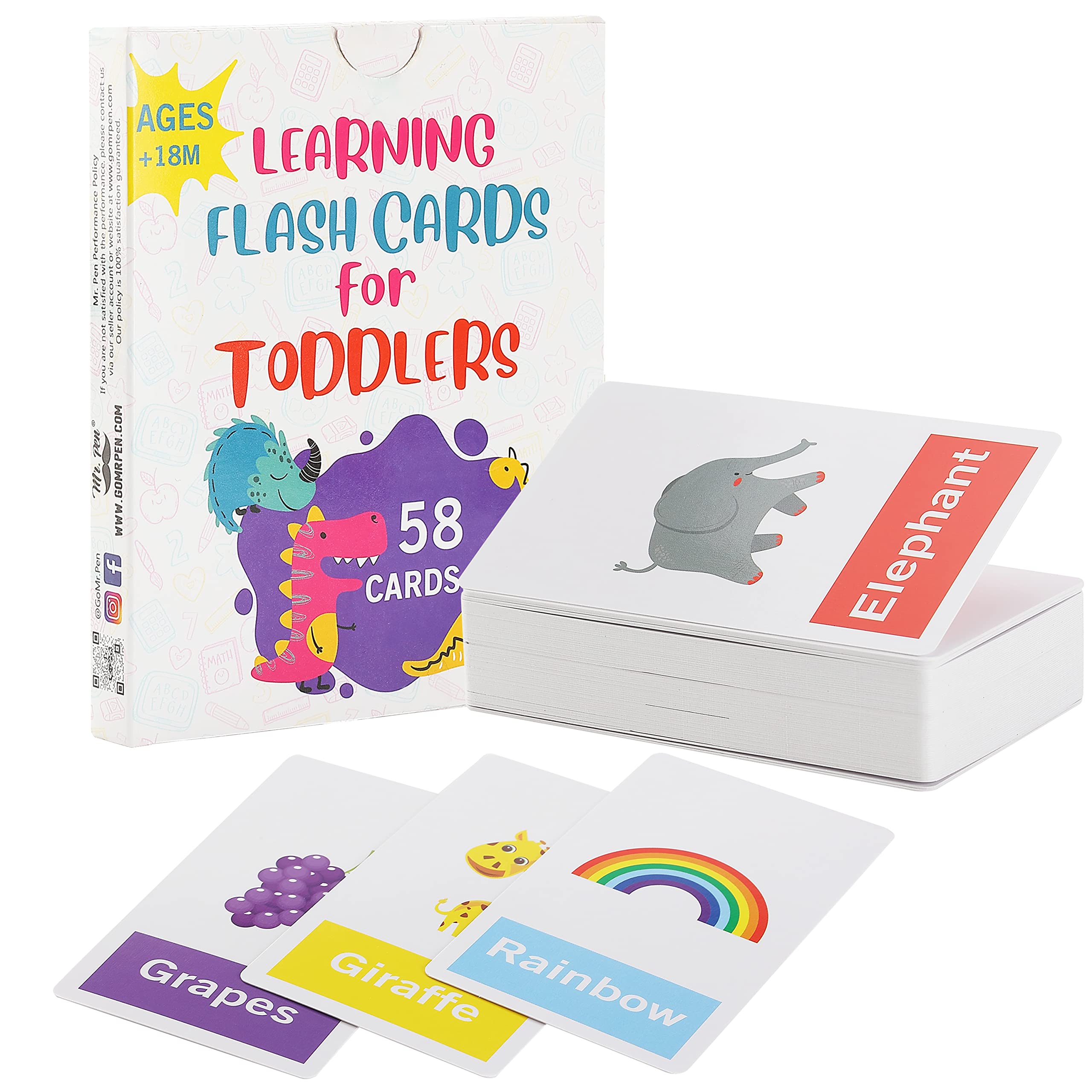
- The set includes 58 alphabet flash cards.
- Cards measure 4.2 x 2.5 inches and are sized for small hands.
- Laminated waterproof cards are wipeable and tear-resistant.
Best For: Toddlers and preschoolers who need compact, screen-free alphabet and picture practice.
Learning Resources Sight Word Stomp!
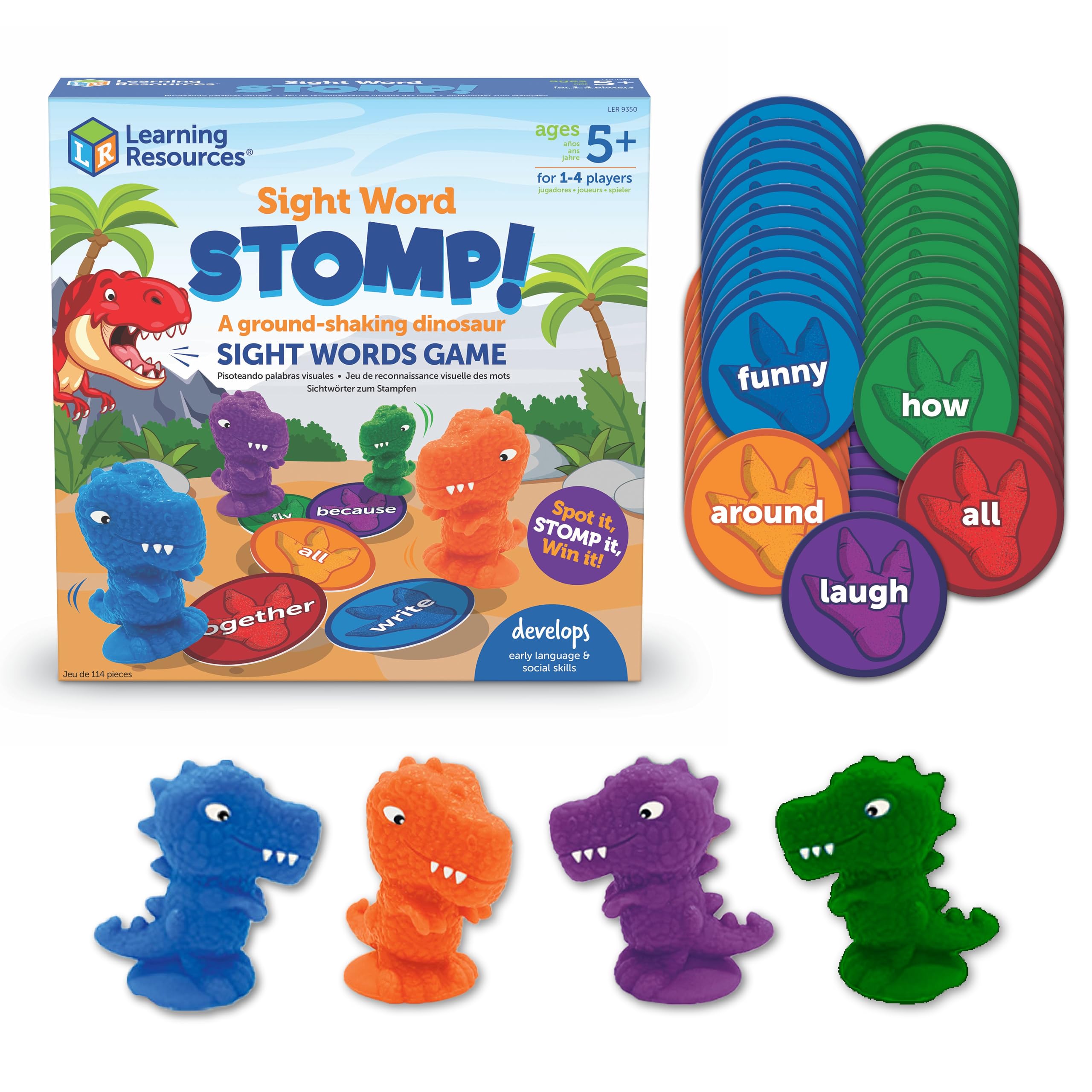
- Four dinosaur stompers suction to the word cards.
- Includes 110 double-sided cards with 220 sight words.
- Words are color-coded from Pre-Primer through Third Grade.
Best For: Children ages 5 and up who enjoy movement and dinosaur-themed reading games.
Educational Insights Hot Dots Numbers & Counting
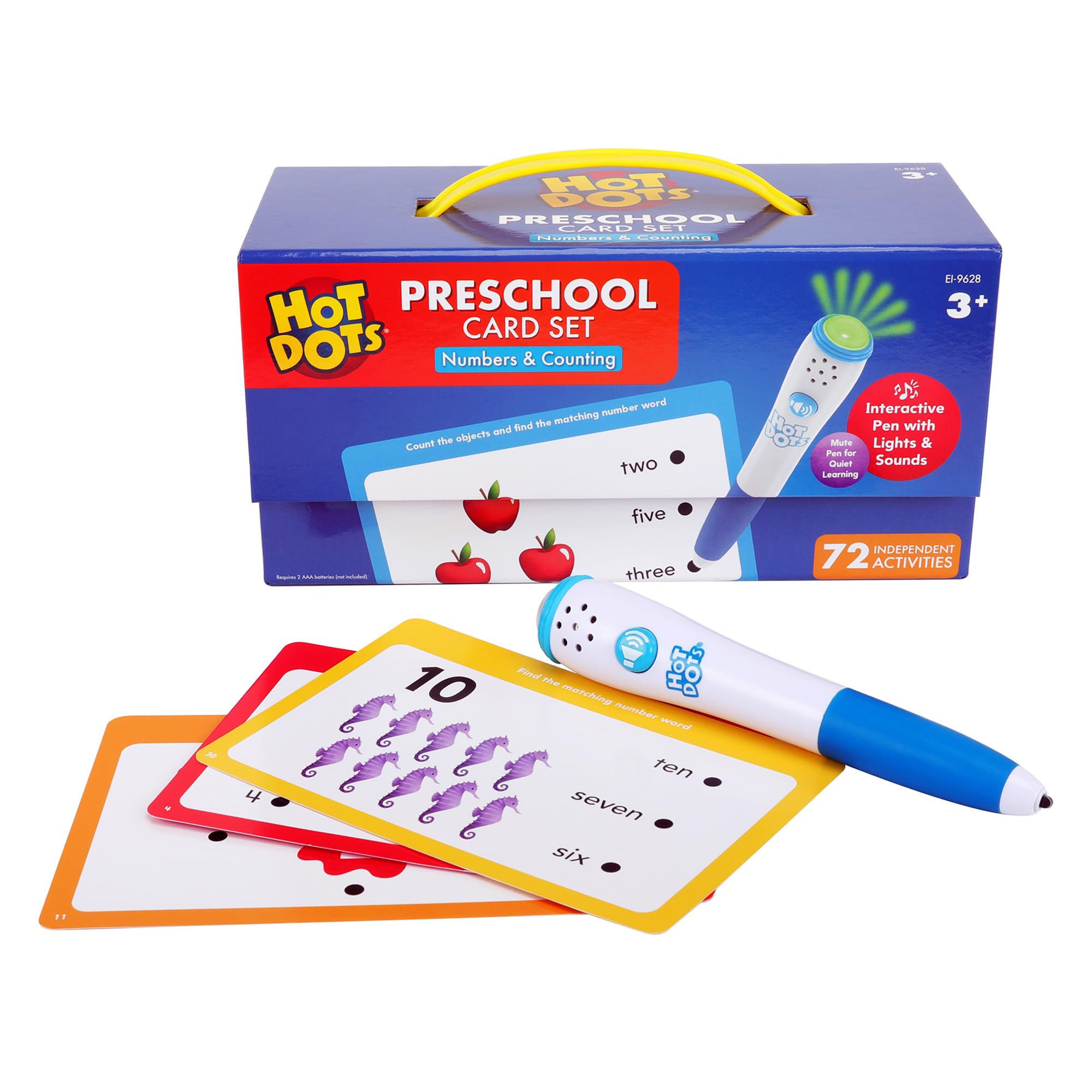
- 36 double-sided cards provide 72 activities.
- The pen gives visual and audio feedback and can be muted.
- A portable handled storage case is included.
Best For: Preschool and kindergarten children practicing counting, number words, and sequencing.
Learning Resources Word Whiz
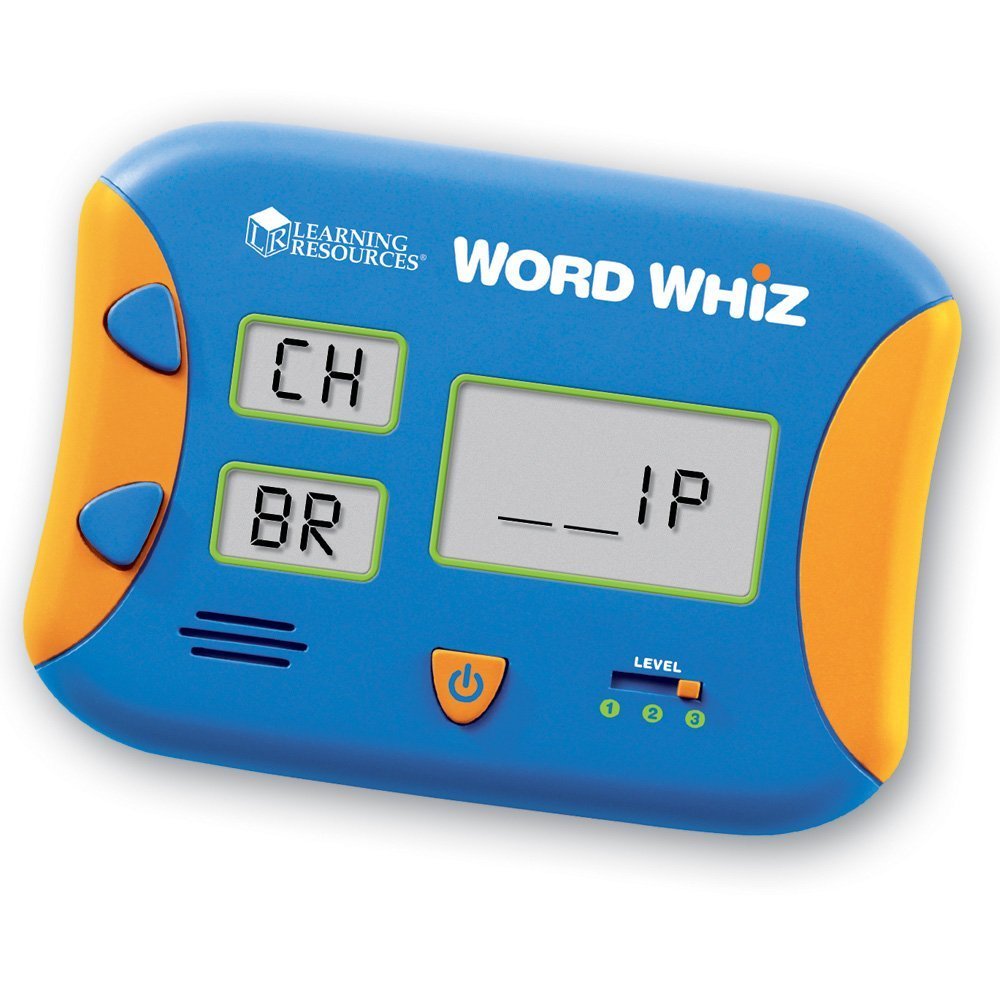
- Players build three-, four-, and five-letter words in 60 seconds.
- Practice combines beginning letters and blends with word families.
- The handheld game has three skill levels and volume control.
Best For: Children ages 5 and up who are ready to combine letters into short words.
Learning Resources Multiplication Master
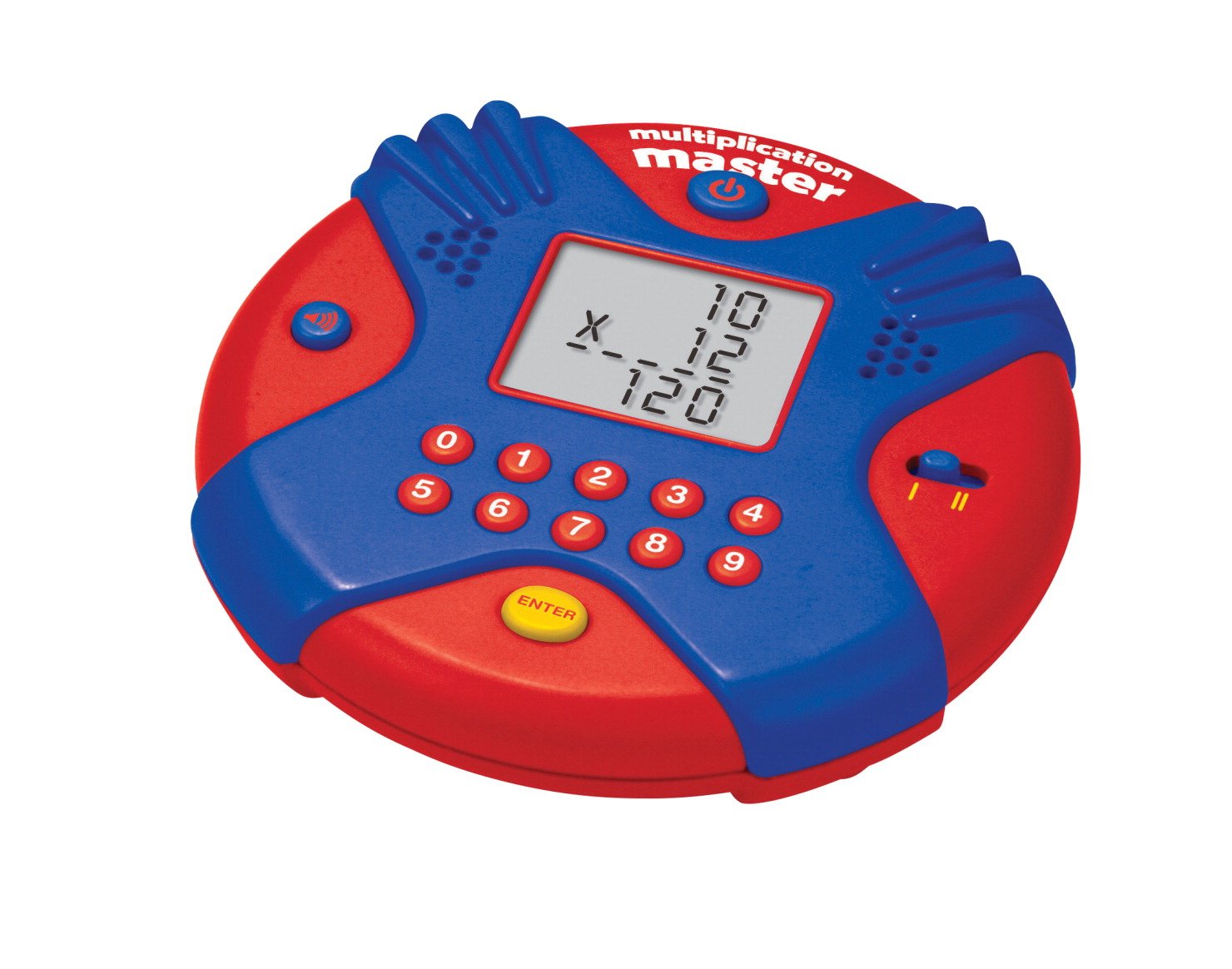
- Practices multiplication facts from 0 to 12.
- Offers two skill levels plus timed and untimed modes.
- The handheld device measures 4.5 inches in diameter.
Best For: Learners ages 7 and up who want focused multiplication fact practice.
Learning Resources Minute Math
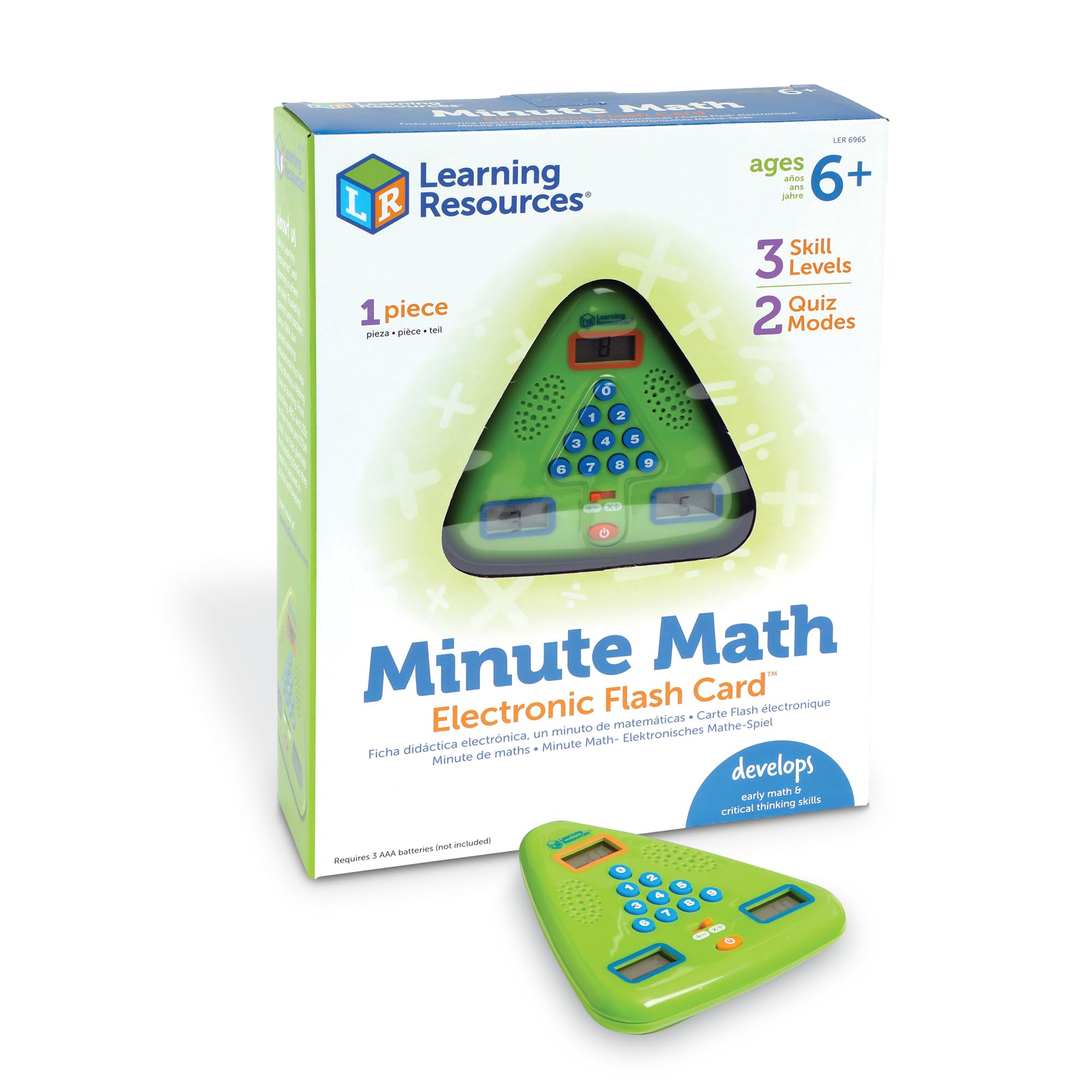
- Covers addition, subtraction, multiplication, and division.
- One-minute timed challenges build a game-like practice session.
- Three progressive levels span first grade through middle school.
Best For: Learners from first grade through middle school practicing addition, subtraction, multiplication, and division.
hand2mind Sort That Sound!
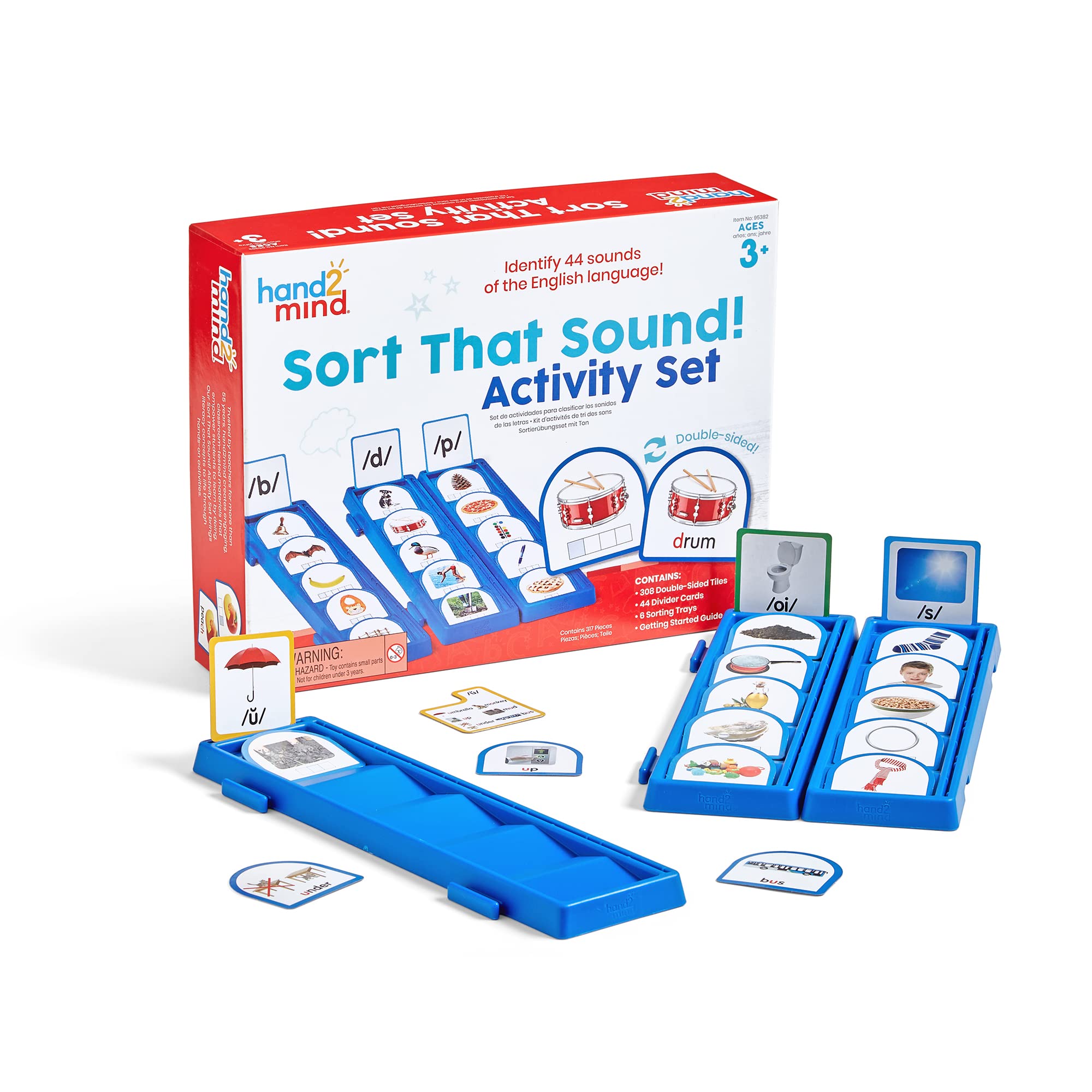
- Includes 44 double-sided sound tiles and 220 double-sided picture tiles.
- Six sorting trays support matching sounds to pictures.
- The sound tiles can also be used as flash cards.
Best For: Beginning readers practicing English sounds with an adult, teacher, or speech-language professional.
hand2mind 3D Sound and Phonics Cards
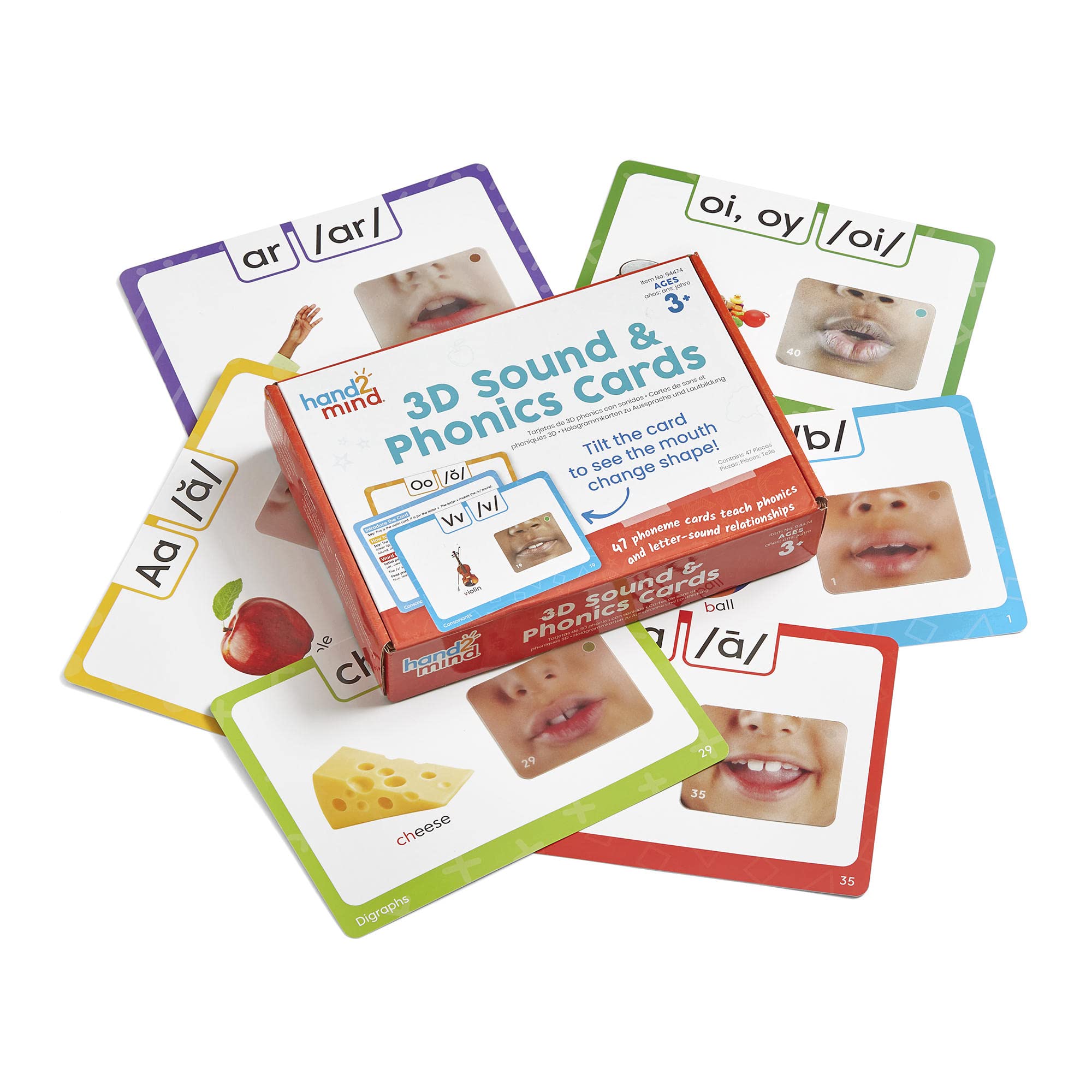
- Cards cover 47 sounds and show mouth movements from start to finish.
- Each card includes teaching tips and example words.
- The 3D image changes to show tongue, lip, and mouth positions.
Best For: Children practicing articulation and phonics with visual guidance on how sounds are formed.
Interactive Phonics Practice
Educational Insights Hot Dots Phonics Fun Set - Preschool and Kindergarten Flash Cards Compatible with Interactive Pen, Preschool Learning Activities, Learn to Read Activity for Kids Ages 3 and Up
Hot Dots Phonics Fun pairs reading practice with an answer-checking pen that gives immediate visual and audio feedback. Its 80 double-sided cards provide 160 activities covering letter sounds, vowels, blends, digraphs, and sight words.
Children can work at their own pace and self-correct, while the pen’s sounds can be muted for quieter use. It suits families and classrooms that want structured early reading practice with built-in feedback.
The pen requires two AAA batteries, which are not included, so have those ready before starting.
Best For: Preschool and kindergarten learners ready to practice letter sounds, blends, and sight words independently.
| Pros | Cons |
|---|---|
|
|
Choose this set when the goal is foundational reading practice with feedback built into each activity. It concentrates on phonics and sight words, while broader preschool sets combine reading with math or counting.
Check that the learner is ready to tap answer dots and that you have two AAA batteries available. The cards offer many self-paced activities, but the product details do not identify a storage case, so plan how to keep the set together if it will travel between home and school.
Large-Format Alphabet Learning
hand2mind Alphabet Picture Mnemonic Cards, ABC Flashcards for Kids, Classroom Alphabet Cards, Early Learning Flash Cards, Letter Recognition, Montessori Alphabet Cards, Toddler Learning Activities
These jumbo alphabet cards connect lowercase letter shapes with familiar pictures that cue each letter’s sound. The reverse side gives children a chance to practice uppercase and lowercase forms with a small visual reminder.
At 6 x 8 inches, the cards are intended to be easy to see in classroom displays and group activities. An activity guide adds letter recognition, phonics, and word-building ideas.
This is a focused alphabet set rather than a broad reading curriculum, making it a practical fit for early literacy routines where clear visual cues matter.
Best For: Young learners practicing letter recognition and sounds at home or in a classroom center.
| Pros | Cons |
|---|---|
|
|
Pick these cards for visible, picture-supported alphabet practice, especially when adults want to use them in classroom displays or small groups. They focus on letter recognition, sounds, and early word building rather than spelling games or broad vocabulary.
The larger format can be helpful for group viewing but may be less convenient to carry than compact toddler cards. Check the learner’s familiarity with lowercase letters, since the picture mnemonic centers on lowercase letter shapes.
Wipe-Clean Cards for Little Hands
Mr. Pen- Alphabet Flash Cards for Toddlers, Double-Sided, 58 Picture Cards | Toddler Flash Cards, Alphabet Flash Cards, Baby Flash Cards, Letter Flash Cards, ABC Flash Cards, Number Flash Cards
Mr. Pen’s set contains 58 double-sided alphabet picture cards sized for small hands. The cards measure 4.2 x 2.5 inches, with large lettering and colorful illustrations for early recognition activities.
Their laminated, waterproof surfaces are described as wipeable, and the cards are made to resist tearing and bending. This is a straightforward, non-digital option for practicing letters, colors, counting, and visual patterns together.
It is aimed at children ages 2 to 6, though the wide range of activities will work best when an adult selects tasks suited to the child.
Best For: Toddlers and preschoolers who need compact, screen-free alphabet and picture practice.
| Pros | Cons |
|---|---|
|
|
Choose these when you want compact physical cards for close-up toddler practice and easy cleanup. The double-sided pictures and broad activity possibilities give adults room to vary sessions, while the laminated format is the main practical distinction from ordinary paper cards.
They are less structured than an interactive pen set, so an adult will guide which skill to practice. Before buying, consider whether the stated card dimensions suit the child’s grip and whether you need a separate way to store the cards.
Active Sight-Word Game
Learning Resources Sight Word Stomp! - Alphabet Toys, Phonics Flash Cards, Classroom Board Games, ABC Homeschool, Reading Manipulatives, Gifts for Boys and Girls, Visual Vocabulary
Sight Word Stomp! turns word practice into an active game with four colorful dinosaur stompers that suction to word cards. The set has 110 double-sided cards containing 220 sight words, color-coded from Pre-Primer through Third Grade difficulty.
This range lets adults choose words that fit a child’s current reading stage. The game format offers an alternative to simple flash-and-repeat drills and can work for family play, homeschool, or classroom centers.
The stompers and word cards make it more of a hands-on activity set than a compact deck for quick review.
Best For: Children ages 5 and up who enjoy movement and dinosaur-themed reading games.
| Pros | Cons |
|---|---|
|
|
This is a good match when a learner responds well to movement and playful competition. Its 220 words span several difficulty levels, giving adults a way to select a manageable group instead of presenting every word at once.
Compared with flat alphabet cards, the suctioning dinosaurs add a physical game element but also mean there are more pieces to keep track of. Check that the child is ready for sight words and can play with the stompers safely and comfortably.
Self-Checking Number Cards
Educational Insights Hot Dots Numbers & Counting Set - Preschool Learning Activities, Interactive Math Flash Cards for Toddlers 3-5 Years, Kindergarten Classroom Must Haves & Homeschool Essentials
This Hot Dots set combines 36 double-sided number cards with an interactive pen, providing 72 activities for early math practice. Children tap the pen to an answer dot and receive visual and audio feedback, with green and red lights indicating correct and incorrect choices.
The sounds can be muted, and a handled storage case is included for moving or putting the set away. It focuses on number recognition, number words, counting, and sequencing.
The pen requires two AAA batteries, which are not included, so plan for that extra purchase.
Best For: Preschool and kindergarten children practicing counting, number words, and sequencing.
| Pros | Cons |
|---|---|
|
|
Choose this set for structured early math practice when independent feedback is useful. It is narrower than a combined preschool prep kit because it concentrates on numbers and counting, but its included case makes it easy to gather for travel or classroom use.
The pen’s lights and sounds can help make answers clear, and the mute option suits quieter spaces. Check the child’s readiness for number recognition and remember to supply two AAA batteries.
Timed Word-Building Practice
Learning Resources Word Whiz Electronic Flash Card, Letter Games for Kids, Word Recognition, Ages 5+
Word Whiz is an electronic handheld game that challenges children to build three-, four-, and five-letter words in a 60-second round. It combines beginning letters and blends with word families, making it suited to children who are moving beyond letter identification into word construction.
Three skill levels offer some variation, while immediate feedback and volume control keep the device simple to use. This is a screen-free electronic learning game, not a traditional deck of printed cards, so it fits buyers who want quick interactive word-building sessions more than a large collection of review cards.
Best For: Children ages 5 and up who are ready to combine letters into short words.
| Pros | Cons |
|---|---|
|
|
Choose Word Whiz when a learner already knows some letter sounds and is ready to build short words under a time limit. It offers a faster, more game-like format than picture-based cards, with three levels to adjust the challenge.
Because it is electronic and does not include a documented card count, it will not suit buyers seeking a conventional card deck. Check whether the timed format feels motivating for the child and confirm the power requirements before purchase.
Dedicated Multiplication Drills
Learning Resources Multiplication Master Electronic Flash Card, Math Skills, Varying Skill Levels, Ages 7+
Multiplication Master is a handheld electronic flash-card game for multiplication facts from 0 to 12. It offers two skill levels and both timed and untimed modes, so learners can choose between a relaxed pace and a 60-second challenge.
The vertical problem format and sound effects give this device a distinct focus compared with general math cards that cover several operations. It measures 4.5 inches in diameter and requires three AAA batteries, which are not included.
Choose it when multiplication fluency is the goal rather than broad early-number instruction.
Best For: Learners ages 7 and up who want focused multiplication fact practice.
| Pros | Cons |
|---|---|
|
|
This is the focused option for children who are ready to work specifically on multiplication facts. The timed and untimed modes make it possible to practice without a countdown or add a speed challenge, while the two skill levels offer less range than a multi-operation device.
It is an electronic drill rather than a set of reusable printed cards. Check that multiplication is the needed skill and have three AAA batteries ready.
Four-Operation Math Fluency
Learning Resources Minute Math Electronic Flash Card - Classroom Must Haves, Homeschool Supplies, Math Manipulatives, Multiplication Chart, Educational Toys for Toddlers, Back to School
Minute Math replaces a paper deck with a portable electronic flash card that covers all four basic operations. It offers one-minute timed challenges and three progressive skill levels, spanning learners from first grade through middle school.
A silent mode can disable sounds, which is useful for practice in classrooms or while traveling. The broad math coverage makes it more flexible than a multiplication-only device, though buyers focused on one specific operation may prefer a narrower drill.
It is designed for home and classroom use, with skill levels intended to grow alongside the learner.
Best For: Learners from first grade through middle school practicing addition, subtraction, multiplication, and division.
| Pros | Cons |
|---|---|
|
|
Choose Minute Math when a learner needs practice across several operations in one portable device. Its three levels and silent option help it serve different settings, while Multiplication Master is more focused on a single operation and explicitly provides timed and untimed modes.
The one-minute challenges favor short, brisk sessions. Check whether the learner is comfortable with timed practice and confirm the power requirements before buying.
Phonemic-Awareness Sorting Set
hand2mind Sort that Sound Activity Set, Phonemic Awareness, Ages 3+
Sort That Sound! is a hands-on phonemic-awareness activity set that includes sound tiles, picture tiles, dividers, and sorting trays. Learners match the sounds represented on the tiles with pictures, and the double-sided sound tiles can also be used as flash cards.
The set covers 44 sounds of English and is designed for phonics practice, ESL teaching, and speech therapy settings. It contains many components, which suits guided table activities better than quick carry-around review.
The product details identify the materials as cardboard and give the overall dimensions, so consider your storage space before choosing it.
Best For: Beginning readers practicing English sounds with an adult, teacher, or speech-language professional.
| Pros | Cons |
|---|---|
|
|
Pick this activity set for guided practice in hearing and sorting English sounds, particularly in a classroom or therapy setting where an adult can introduce the materials. It offers more manipulation than a simple deck, but its multiple tiles, dividers, and trays need a workspace and an organizing plan.
The sound tiles also work as flash cards, so the set can shift from matching activities to review. Check that phonemic awareness is the target skill and that the learner can manage the sorting task.
Visual Mouth-Shape Phonics
hand2mind 3D Sound and Phonics Cards, Phonemic Awareness, Phonics Flash Cards, Letter Sounds for Kindergarten, Speech Therapy Toys, ESL Teaching Materials, Science of Reading Manipulatives
These phonics cards cover 47 sounds and use a changing 3D image to show mouth movement, including the position of the tongue, lips, and mouth. Each card also includes teaching tips, sound-formation guidance, and example words.
That makes the set useful for adults guiding articulation or early phonics practice, with repeated use in small groups or at home. It is more specialized than alphabet cards because it focuses on how spoken sounds are formed.
Check that the learner would benefit from visual mouth-position cues and that an adult can help interpret the teaching tips.
Best For: Children practicing articulation and phonics with visual guidance on how sounds are formed.
| Pros | Cons |
|---|---|
|
|
These cards suit learners who need help connecting a sound with the mouth movements used to produce it. Their 3D visuals and teaching tips offer more articulation guidance than ordinary letter cards, but the specialized focus makes them less suitable as a broad vocabulary or number set.
An adult can use the example words to model sounds and revisit them in short sessions. Before buying, consider whether this visual support matches the learner’s needs and whether a guide will be available during practice.
How to Choose Educational Flash Cards
How We Picked Educational Flash Cards
We prioritized products with a clear learning target, such as letter recognition, phonics, sight words, early counting, multiplication, or word building. The selection includes conventional picture cards as well as interactive readers and game-based activities because families and teachers use flash cards in different ways.
Age and use context also shaped the choices. Compact alphabet cards suit hands-on toddler practice, while answer-checking pens and structured sorting sets support more guided preschool or classroom work.
For older learners, the picks focus on sight-word reading, spelling construction, or specific math facts rather than introductory alphabet recognition.
Comparing Educational Flash Cards by Learning Goal
Start with the skill the learner needs to practice. The alphabet and phonics options build letter-sound links, while Sight Word Stomp! emphasizes repeated recognition of familiar words.
Hot Dots adds immediate self-checking feedback, and Sort That Sound! asks learners to match sound tiles with picture examples.
For math, Minute Math covers four operations in timed challenges, while Multiplication Master concentrates on multiplication and offers timed or untimed modes. Interactive talking readers provide spoken vocabulary in a selected language pair, but several supplied candidates share the same reader format with only the language and word set changed.
The roundup includes other distinct practice formats to keep the comparison useful across subjects.
| Product | Standout features | Best for |
|---|---|---|
| Educational Insights Hot Dots Phonics FunCheck Price |
| Preschool and kindergarten learners ready to practice letter sounds, blends, and sight words independently. |
| hand2mind Alphabet Picture Mnemonic CardsCheck Price |
| Young learners practicing letter recognition and sounds at home or in a classroom center. |
| Mr. Pen Alphabet Flash CardsCheck Price |
| Toddlers and preschoolers who need compact, screen-free alphabet and picture practice. |
| Learning Resources Sight Word Stomp!Check Price |
| Children ages 5 and up who enjoy movement and dinosaur-themed reading games. |
| Educational Insights Hot Dots Numbers & CountingCheck Price |
| Preschool and kindergarten children practicing counting, number words, and sequencing. |
| Learning Resources Word WhizCheck Price |
| Children ages 5 and up who are ready to combine letters into short words. |
| Learning Resources Multiplication MasterCheck Price |
| Learners ages 7 and up who want focused multiplication fact practice. |
| Learning Resources Minute MathCheck Price |
| Learners from first grade through middle school practicing addition, subtraction, multiplication, and division. |
| hand2mind Sort That Sound!Check Price |
| Beginning readers practicing English sounds with an adult, teacher, or speech-language professional. |
| hand2mind 3D Sound and Phonics CardsCheck Price |
| Children practicing articulation and phonics with visual guidance on how sounds are formed. |
Choosing Flash Cards for Reading and Language Practice
For early reading, consider whether the learner needs alphabet recognition, sound formation, phonics patterns, or sight-word recall. Picture mnemonic cards connect letters to visual cues, while the 3D Sound and Phonics Cards show mouth positions for speech sounds.
Sight Word Stomp! adds movement, and Hot Dots Phonics Fun supplies answer feedback across several foundational topics.
If the goal is bilingual vocabulary, match the reader to the languages spoken at home and check that the pronunciation and audio modes fit your routine. A talking reader can provide spoken prompts without a screen, while printed cards allow adults to set their own pace, add conversation, or practice quietly.
Math Flash Cards for Number Sense and Fluency
Preschool math cards can focus on counting and sequencing, while later practice may shift toward multiplication facts or several operations. Hot Dots Numbers & Counting combines double-sided activities with a pen and handled case.
Multiplication Master has a narrower multiplication focus, and Minute Math moves among addition, subtraction, multiplication, and division.
Consider the practice format along with the subject. Timed rounds can make a short activity feel game-like, but learners who need time to think may prefer untimed review.
Electronic devices may also require batteries; check the included components and power details before setting up a session.
Who Should Buy Which Educational Flash Cards
Choose compact picture cards for adult-led alphabet practice and a self-checking pen set when independent answers matter. For active readers, the dinosaur stompers make sight-word review physical; for phonics instruction or articulation, the sound-sorting tiles and 3D mouth images offer more targeted practice.
For early math, choose number and counting activities before moving to a multiplication-focused device or broader four-operation drills. The right educational flash cards are the ones that fit the learner’s current skill, preferred way to practice, and the time an adult can spend guiding the activity.